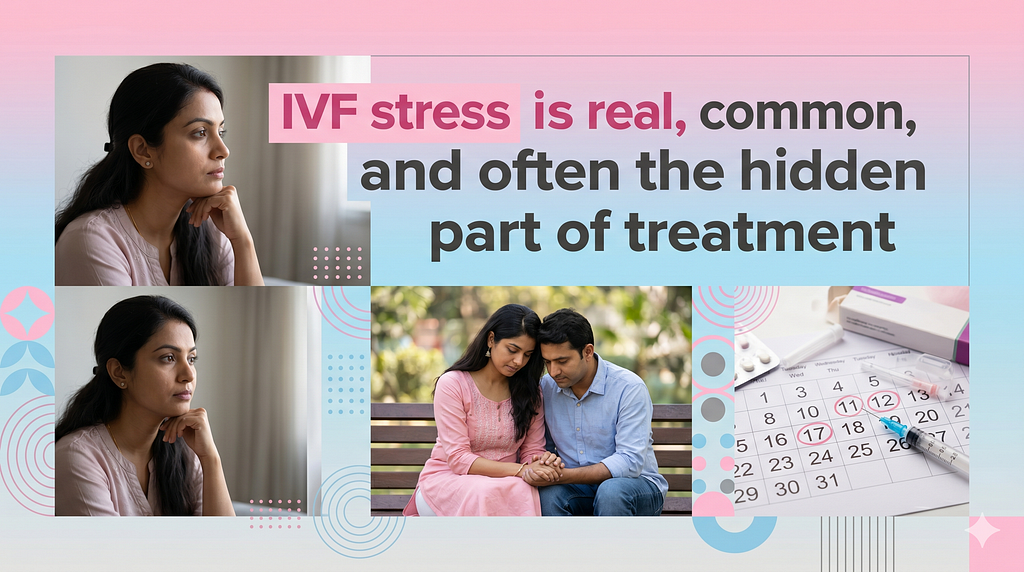
The path to parenthood is rarely a simple, straight line. For those navigating the complexities of In Vitro Fertilisation (IVF), it often feels more like a demanding expedition. Between the strict medication schedules, endless clinic visits, and the profound emotional investment, it is incredibly easy to feel overwhelmed.
If you are feeling anxious, you are far from alone. The emotional toll of fertility treatments is a highly documented, yet frequently unspoken, reality. According to a landmark study by the American Society for Reproductive Medicine (ASRM), 70% of women report experiencing significant anxiety, and 60% of men experience elevated stress during the IVF process. Recognising that this stress is a normal, valid response to an incredibly high-stakes situation is the first step toward reclaiming your peace of mind.
What is Really Happening in Your Body? The Mind-Body Connection
When we discuss IVF, the conversation usually revolves around the physical mechanics: egg retrieval, sperm preparation, and embryo transfer. However, the mental battlefield of IVF is equally as crucial to your overall experience and, potentially, your outcomes.
The constant waiting periods of ten, dubbed the “two-week wait”, along with financial pressures and the sheer uncertainty of the outcome, can shift your nervous system into a chronic state of “fight or flight.” When your brain perceives this ongoing emotional threat, it commands your adrenal glands to release stress hormones.
Cortisol levels, in particular, can skyrocket during this time. While cortisol is necessary for daily functioning, chronically high levels can disrupt the delicate, finely-tuned balance of reproductive hormones required for a successful pregnancy. Elevated cortisol can interfere with the signalling between the brain, the pituitary gland, and the ovaries (the hypothalamic-pituitary-ovarian axis). Simply put, when your body believes it is under constant threat, it instinctively deprioritises reproduction. Managing your mental health isn’t just about feeling better; it is about creating the most hospitable biological environment possible.
Demystifying the Data: Why Tests Feel So Confusing
One of the most frustrating and anxiety-inducing aspects of IVF is the sheer barrage of medical tests. You are frequently handed lab reports filled with complex acronyms and numbers that can feel impossible to decode without a medical degree. Understanding these metrics can transform them from sources of fear into tools of empowerment.
Here is a breakdown of a few common factors that influence IVF success:
• AMH (Anti-Müllerian Hormone) Levels: This hormone is produced by the small follicles in your ovaries. Your AMH level gives your doctor an estimate of your ovarian reserve — essentially, the remaining quantity of your eggs. A lower AMH doesn’t mean you cannot get pregnant; it simply guides your doctor in determining the right dosage of stimulation medication for your specific body.
• FSH (Follicle-Stimulating Hormone) Levels: Produced by the brain, FSH tells your ovaries to grow and mature eggs each month. High baseline FSH levels often indicate that the brain is working exceptionally hard to prompt the ovaries, which can sometimes point to a diminished ovarian reserve.
• Sperm DNA Fragmentation: Male factor infertility is a critical part of the equation. This test goes beyond a standard semen analysis (which looks at count, movement, and shape) to examine the genetic integrity of the sperm. High DNA fragmentation can lead to lower fertilisation rates or poor embryo development, guiding doctors to use specialised techniques like ICSI (Intracytoplasmic Sperm Injection).
Understanding what these tests actually measure helps you partner with your medical team, rather than feeling at the mercy of confusing numbers.
Actionable Strategies: What You Can Actually Do
While you cannot control every outcome of an IVF cycle, you can control how you support your body and mind through the process. Here are several evidence-based strategies to manage stress effectively:
• Practice Mindfulness and Meditation: You don’t need to meditate for hours to see benefits. Just 10 to 15 minutes of deep, diaphragmatic breathing or guided visualisation daily can actively lower your heart rate, reduce circulating cortisol levels, and ground you in the present moment.
• Stay Physically Active (Gently): While intense, high-impact workouts like heavy weightlifting or rigorous HIIT classes are generally discouraged during active stimulation phases, moderate movement is vital. Brisk walking, swimming, or restorative fertility yoga promotes healthy blood circulation and releases natural endorphins, which are potent stress-relievers.
• Build a Robust Emotional Support System: IVF can feel incredibly isolating. Do not carry this burden alone. Seek out emotional support from trusted loved ones, join a local or virtual infertility support group, or connect with a therapist who specialises in reproductive mental health. Sharing your fears with people who truly understand can be profoundly healing.
• Consider Holistic Additions like Acupuncture: Many patients find acupuncture to be a highly effective complementary therapy. By strategically inserting ultra-thin needles into specific points on the body, acupuncture can help increase blood flow to the reproductive organs, promote deep relaxation, and alleviate the physical tension that builds up during treatment.
The Santaan Insight: Comprehensive Care for Your Journey
At Santaan, we deeply understand that you are not just a patient on a chart; you are a human being navigating one of life’s most profound challenges. We recognise the critical importance of emotional support during IVF, which is why we look beyond the clinical procedures.
Our philosophy integrates state-of-the-art medical technology with compassionate, holistic care to help you cope with the emotional toll of fertility treatments. Our dedicated team of specialists, counsellors, and support staff is here to walk alongside you at every step, from your very first consultation all the way to a successful pregnancy.
Frequently Asked Questions
What is the success rate of IVF in India?
The success rate of IVF is highly individualised and depends on a multitude of factors, including the age of the female partner, the underlying causes of infertility, lifestyle factors, and the technological capabilities of the chosen fertility clinic. According to the Indian Society for Assisted Reproduction (ISAR), the overall average success rate of IVF in India currently sits around 30% to 40% per cycle. However, cumulative success rates (over the course of multiple cycles) are often significantly higher.
How can I proactively manage stress during IVF?
Managing stress requires a multi-faceted approach tailored to your lifestyle. It involves prioritising physical, emotional, and mental well-being simultaneously. Effective practices include establishing a daily mindfulness or meditation routine, engaging in doctor-approved light physical activity, setting firm boundaries regarding infertility discussions with well-meaning but intrusive family members, and actively seeking professional emotional support through specialised therapy or support groups.
What are the most common causes of an unsuccessful IVF cycle?
While a failed cycle is deeply disappointing, it provides critical diagnostic information for future attempts. Common causes of IVF failure include poor egg or sperm quality (often leading to embryos with chromosomal abnormalities), diminished ovarian response to stimulation medications, and uterine factors (such as a thin endometrial lining, polyps, or fibroids that hinder implantation). The exact cause varies significantly from person to person, and your specialist will conduct a thorough review to adjust your protocol moving forward.
We want to hear from you. What has been your personal experience navigating IVF stress and pregnancy success in India?
What coping mechanisms have worked best for you?
Share your story and insights with our supportive community with us.
WhatsApp us at: +91 97772 68743