Welcome to the weekend edition of Science for Smile. While much of the AI conversation in 2026 focuses on embryo selection and female-centric diagnostics, a massive paradigm shift is occurring on the other side of the equation. Today, we look at groundbreaking May 2026 data on how machine learning is redefining the approach to male factor infertility, moving from subjective sperm selection to comprehensive, couple-level predictive modelling.
Clinical question
Does the integration of advanced machine learning models (assessing couple-level metabolic data) and AI-driven kinematic sperm selection improve clinical pregnancy predictions and ICSI outcomes for severe male factor infertility compared to traditional manual assessment?
Mechanism
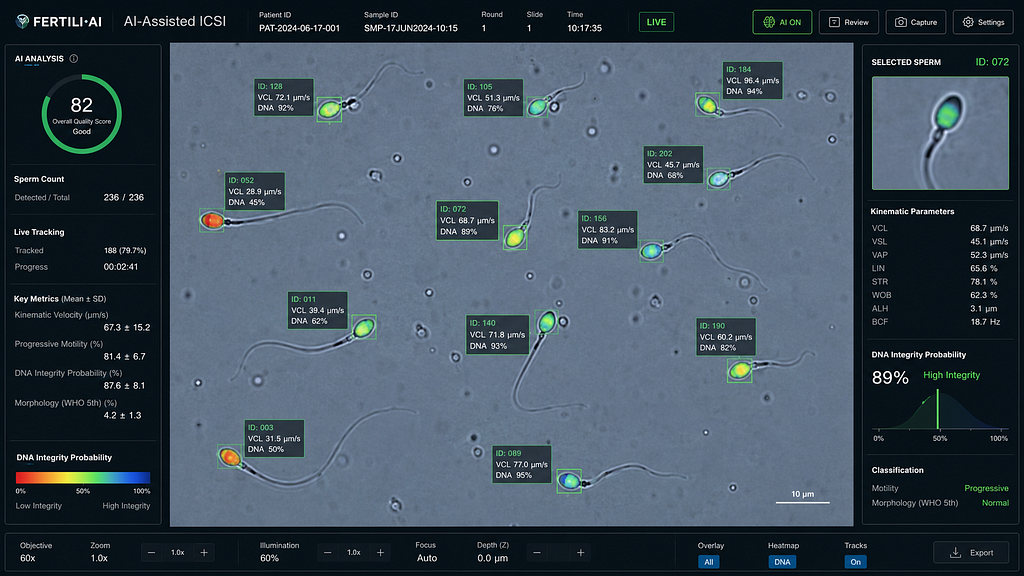
Historically, ICSI outcomes for oligozoospermia or asthenozoospermia relied on an embryologist’s manual, visual selection of sperm based on basic morphology and motility. However, visual appearance does not always correlate with DNA integrity. Advanced AI imaging systems now track subtle kinematic markers, such as micro-variations in tail-beating frequency and head yaw, to predict genetic health. Concurrently, high-dimensional Machine Learning (ML) algorithms, such as Gradient Boosting Trees, analyse non-linear clinical data. Rather than looking at the male and female in isolation, these models analyse “couple-level” synergies (e.g., how the male’s BMI interacts with the female’s metabolic profile) to generate a highly precise, individualised pregnancy prediction.
Evidence summary
A major study published this week in Frontiers in Endocrinology (May 2026) analysed over 2,500 ICSI cycles specifically for male factor infertility. The researchers demonstrated that ML algorithms utilising high-dimensional, couple-level data (particularly highlighting the synergistic impact of spousal BMI) significantly outperformed traditional statistical models in predicting clinical pregnancy. Parallel developments in AI-assisted sperm selection (such as SiD and similar tracking platforms) demonstrate the ability to reduce the DNA fragmentation index in selected sperm, thereby improving blastocyst utilisation rates. Together, these technologies act as an objective biological screener, selecting spermatozoa with the highest probability of initiating euploid embryo development while offering targeted lifestyle intervention points for the couple.
AI workflow
- Automated Sperm Selection: AI software analyses high-magnification, real-time video of the semen sample, simultaneously tracking thousands of spermatozoa and highlighting the optimal candidates for ICSI based on kinematic algorithms.
- High-Dimensional Data Fusion: Couple-level clinical data (ages, combined spousal BMI, baseline endocrinology, infertility duration) are fed into a machine learning algorithm.
- Predictive Modelling: The ML model (e.g., Random Forest or Gradient Boosting) processes the complex, non-linear interactions between both partners’ health metrics.
- Targeted Strategy: The system generates a personalised clinical pregnancy probability score and uses SHAP (SHapley Additive exPlanations) values to isolate exactly which factors (e.g., male metabolic health) are driving the prediction, allowing the specialist to mandate precise pre-treatment interventions.
Limitations/bias
The May 2026 Frontiers study emphasises a crucial limitation: generic ML models not tailored specifically to the male factor subpopulation often suffer from compromised predictive accuracy. Furthermore, algorithms trained on specific retrospective datasets may exhibit population bias. Because BMI and metabolic health impact Indian men differently than Western cohorts (the “South Asian phenotype”), these models must be locally validated. Additionally, AI sperm tracking requires pristine optical setups, and machine-dependent variables can influence kinematic scoring.
Practice takeaway
Precision medicine requires treating the couple, not just the oocyte. For Indian IVF specialists managing rising rates of male infertility, adopting ML predictive models provides a massive clinical advantage. These tools allow us to quantify exactly how male lifestyle factors impact ICSI success, shifting the narrative from a “female-centric” burden to truly integrated couple care. When upgrading your lab, look beyond just embryo scoring and consider integrating AI sperm selection tools to reduce ICSI failure rates at the very first step of fertilisation.
Santaan Insight
At Santaan, we believe that optimising male fertility is just as critical as advancements in oocyte and embryo care. In our clinics across Bhubaneswar, Delhi, and Bengaluru, we are deeply focused on this integrated “couple-level” approach. By leveraging AI not just for embryo selection, but for intelligent sperm selection and holistic, dual-partner predictive modelling, we remove the guesswork from ICSI. This ensures that our embryologists are supported by objective, data-driven insights, allowing our doctors to craft truly personalised treatment protocols that maximise safety, reduce cycle fatigue, and ultimately, bring a smile to our patients’ faces.
References
- Machine learning–based prediction of IVF/ICSI outcomes in male factor infertility highlighting couple-level BMI. Frontiers in Endocrinology, 17(1772106), May 2026. DOI: 10.3389/fendo.2026.1772106
- Artificial intelligence in embryo selection: enhancing precision and overcoming traditional limitations in in vitro fertilisation. International Journal of Reproduction, Contraception, Obstetrics and Gynaecology, 15(2), Feb 2026. DOI: 10.18203/2320–1770.ijrcog20260215
Technical Metadata:
- Editor: @santaanIVF
- Audience: audience-doctor
- Tags: #audience-doctor #doctor-insights #predictive-modeling #PatientSafety #Fertility #MaleInfertility #AIinIVF #ICSI