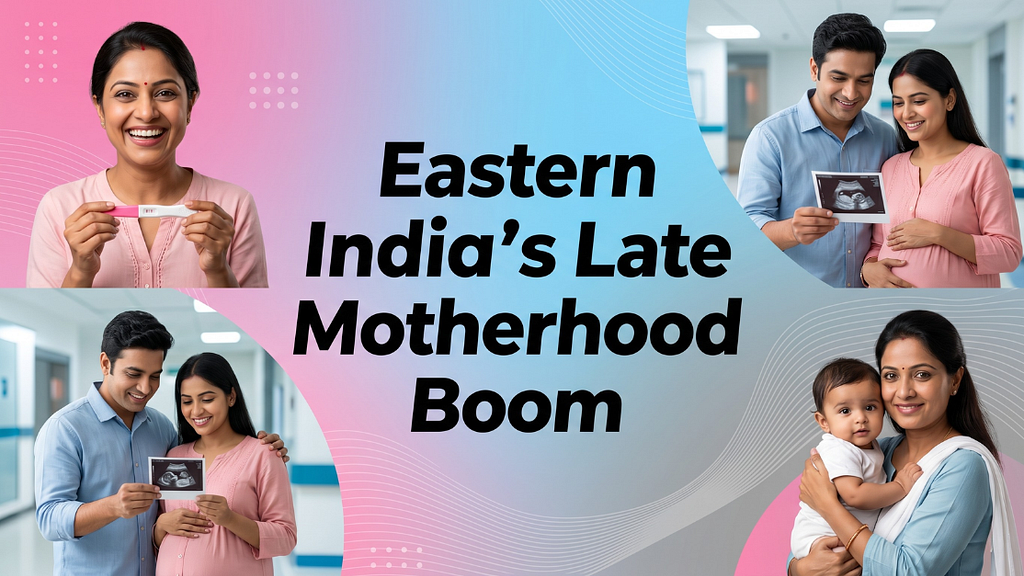
Forget the sprawling, fast-paced metros of Mumbai, Delhi, or Bangalore. The most intriguing ‘delayed motherhood’ story might just be unfolding right in your neighbourhood. Conventional wisdom has long dictated that smaller towns and tier-2 cities hold tightly to traditional timelines: early marriage followed swiftly by parenthood. However, a profound cultural pivot is currently underway. In a fascinating trend that counters decades of established social norms, recent data suggests that women in Eastern India’s tier-2 cities are increasingly delaying motherhood, frequently pushing this major life milestone into their late 30s.
The Changing Demographic: A Look at the Statistics
The numbers paint a striking picture of modern family planning. According to a recent study, nearly 4 in 10 women in Eastern India’s smaller towns and emerging urban centres are now choosing to have children after the age of 35.
What makes this demographic shift particularly remarkable is that it is becoming more pronounced in these regional hubs than in the larger metropolitan cities, where the trend of delayed pregnancies has already been observed and normalised for some time. Eastern India is witnessing a rapid socio-economic evolution, and family planning timelines are adapting as a direct result.
But what is driving this change? The reasons are deeply multifaceted. A primary catalyst is the surge in career aspirations among women in tier-2 cities. With better access to higher education and increasingly diverse professional opportunities, many women are prioritising establishing themselves in their chosen fields. Closely tied to this is the pursuit of financial stability. Raising a child in today’s economic climate requires significant resources, and couples are increasingly opting to build a solid financial foundation before expanding their families. Furthermore, there is a growing, undeniable desire for personal fulfilment, whether that means travelling, focusing on mental well-being, or simply enjoying life as a couple, before taking on the lifelong responsibilities of motherhood.
The Biological Reality: Impact on Fertility
While the socio-economic shift is empowering, it is essential to approach the topic of delayed motherhood with candour regarding human biology. Postponing pregnancy can have significant, scientifically documented implications for fertility.
The biological clock is a reality tied directly to ovarian reserve. Women are born with a finite number of eggs. As a woman ages, particularly after crossing the threshold of 32, and more significantly after 35, both the quantity and the quality of her eggs naturally decline. This physiological change makes it inherently more challenging to conceive naturally.
Furthermore, the medical risks associated with pregnancy evolve with age. Older mothers face a statistically higher risk of pregnancy-induced complications, such as gestational diabetes and preeclampsia. Additionally, the risk of chromosomal abnormalities in the embryo, such as Down syndrome, increases as maternal age advances.
However, it is vital to balance this reality with optimism and facts. Age is a factor, but it is not an absolute barrier. With advancements in modern medicine and a much deeper understanding of reproductive health, a vast number of women are able to successfully conceive, carry to term, and have perfectly healthy babies in their later years.
Modern Science to the Rescue: Bridging the Gap
The narrative of delayed motherhood is no longer defined solely by biological limitations; it is now heavily supported by reproductive technology. Advancements in fertility treatments have revolutionised how and when women can choose to become mothers.
For women who know they want children but are not quite ready, proactive measures like egg freezing (oocyte cryopreservation) are becoming increasingly accessible, allowing women to preserve their fertility at its peak. For those facing challenges conceiving later in life, treatments such as In Vitro Fertilisation (IVF) and Intrauterine Insemination (IUI) offer highly successful pathways to parenthood. Modern clinics also utilise Preimplantation Genetic Testing (PGT) to screen embryos for chromosomal abnormalities before transfer, significantly reducing the risks historically associated with advanced maternal age.
Addressing the Challenge: Proactive Steps for Future Parents
Knowledge is the most powerful tool in navigating the journey of delayed parenthood. Women and couples need to be acutely aware of both the potential risks and the available solutions associated with having children later in life.
Here are practical steps to support a healthy conception journey:
• Prioritise Regular Health Check-ups: Routine screenings can identify underlying conditions (like thyroid imbalances or PCOS) that might affect fertility.
• Assess Ovarian Reserve: Simple blood tests, such as measuring Anti-Müllerian Hormone (AMH) levels, can provide valuable insights into a woman’s current fertility status.
• Maintain a Balanced Lifestyle: A nutrient-rich diet, regular physical activity, and stress management play a crucial role in optimising reproductive health.
• Seek Early Consultation: Having open, early discussions about family planning with a gynaecologist or a fertility specialist can help mitigate risks and create a personalised roadmap.
Access to quality fertility care and robust emotional support systems can make a tremendous difference, transforming the journey to parenthood from a source of anxiety into a managed, hopeful process.
Frequently Asked Questions
What is the ideal biological age for pregnancy?
From a purely biological standpoint, the optimal age for pregnancy is generally considered to be between 20 and 35 years. During this window, a woman’s eggs are at their healthiest and most fertile, and the physical risks associated with pregnancy and childbirth are at their lowest. However, “ideal” is subjective. With proper medical care, prenatal planning, and healthy lifestyle choices, many women routinely have highly successful and safe pregnancies well beyond this age bracket.
Exactly how does age affect fertility?
Age impacts fertility primarily through the natural depletion of ovarian reserve. As women age, the total number of available eggs decreases, and the remaining eggs are more likely to have chromosomal abnormalities. This dual decline in quantity and quality makes spontaneous conception more challenging and increases the likelihood of early miscarriage. The risk of pregnancy-related complications for the mother also sees a gradual increase as she gets older.
What are the best options for fertility treatment if I am struggling to conceive?
The landscape of fertility treatment is advanced and highly individualised. Common options include:
• IUI (Intrauterine Insemination): Often a first-line treatment where concentrated sperm is placed directly into the uterus during ovulation.
• IVF (In Vitro Fertilisation): A highly effective process where eggs are retrieved, fertilised in a lab, and the resulting embryo is transferred to the uterus.
• Egg Freezing: A proactive option for women wishing to preserve their younger, healthier eggs for future use.
The best course of action is highly dependent on an individual’s specific medical history, age, and circumstances, and should always be determined in consultation with a board-certified fertility specialist.
What are your thoughts on delayed motherhood and its implications for fertility?
Share your experiences and questions with us.
WhatsApp us at: +91–9777268755
Publishing Metadata
Published from @santaanIVF
Tags: #audience-patient #IVFSuccess #FertilityJourney #Fertility guidance #WomensFertility #InfertilityAwareness
Internal Links:
Precision IVF Protocols at Santaan: https://www.google.com/search?q=https://santaan.in/ivf-treatment
AI-Driven Embryology Technology: https://www.google.com/search?q=https://santaan.in/technology
Read our previous blogs: https://santaan.in/fertility-insights